Mathematical Art: Interlocking Tetrahedra
Some of our favorite projects at the MakerLab sit at the intersection of mathematics and art. Jeong Woo Koo has become a regular visitor, pushing the limits of what's possible with interlocking geometric shapes.
The Challenge of Interlocking Geometry
Interlocking tetrahedra are mathematically fascinating objects where multiple four-sided pyramids pass through each other in impossible-looking configurations. Printing these structures requires:
- Finest resolution available (0.1mm or better) for clean edges
- 20% infill for strength without excessive weight
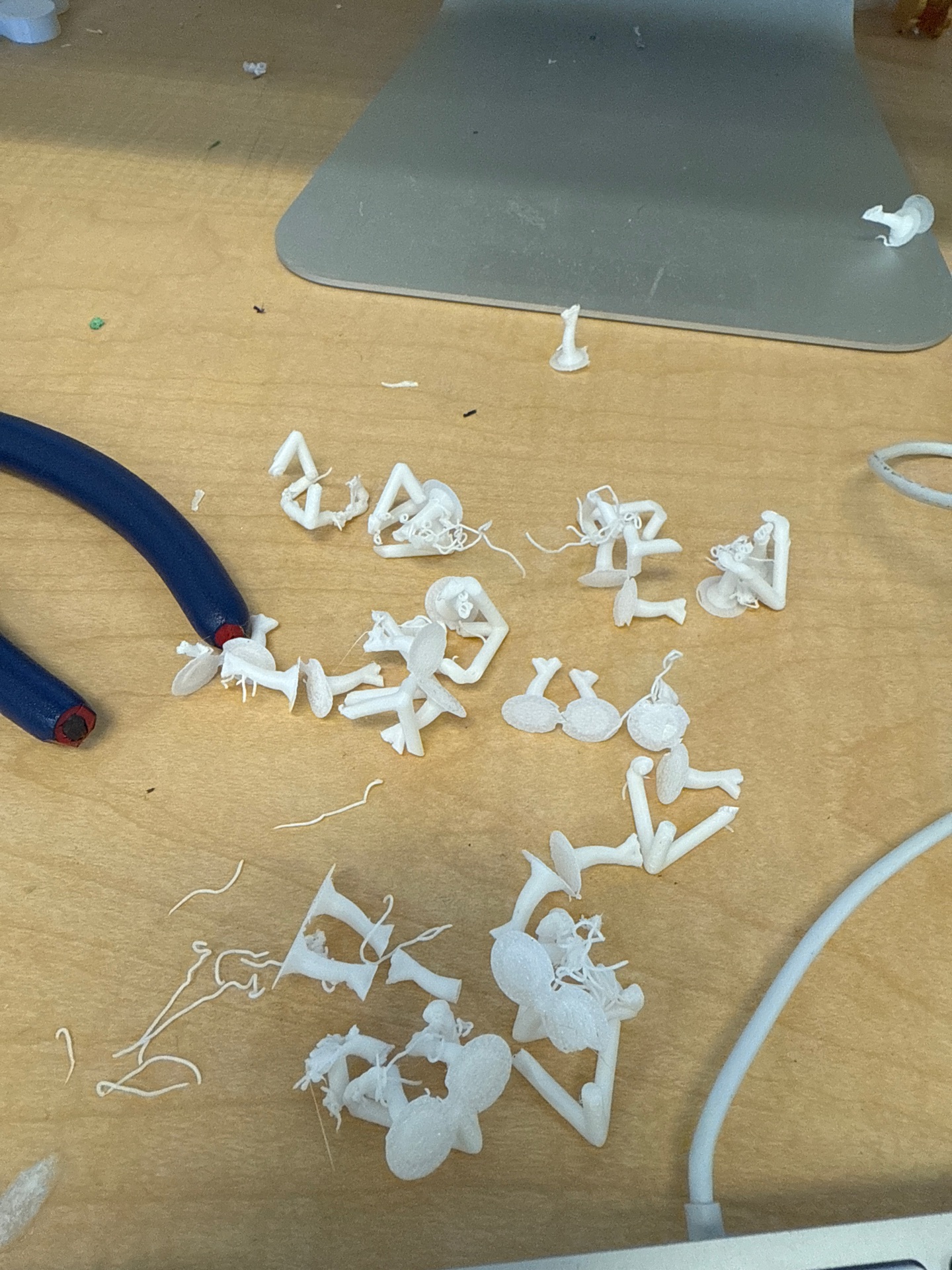
- Extensive support structures due to complex overhangs
- Careful post-processing to remove supports without damaging delicate features
Jeong Woo has ordered multiple variations, including thick/thin versions and "unlocked" designs where the tetrahedra can actually be separated—an even more complex challenge.
Pushing Printer Capabilities
These prints tested our equipment. Our team experimented with different approaches:
- Initial attempts on the Ultimaker 2+C showed quality limitations
- Our new Bambu printer delivered better results for fine detail work
- Support removal required patience and precision tools
Projects like these help us understand the capabilities and limits of our printers—knowledge that benefits all our makers.
Math Meets Making
3D printing has opened new possibilities for mathematical visualization. Objects that exist only in equations can now be held in your hands. Teachers use printed geometric shapes to help students understand spatial relationships. Artists create sculptures that would be impossible to fabricate any other way.
Interested in mathematical art or geometric sculptures? The MakerLab welcomes challenging projects. Share your ideas with us!